
Collagen and Your Health: What You Need to Know Before Adding It to Your Diet.
Collagen has been of interest to many, particularly women, for some time. I often hear questions about it from older women as they begin to notice signs of ageing. Changes to the quantity and quality of collagen typically start around the age of 30.
Questions often focus on taking supplements rather than addressing diet and lifestyle, as supplements are perceived to be convenient, and some women, including celebrities, swear by their effectiveness.
Despite being abundant in our bodies, collagen has become a top-selling supplement, reputed to improve hair, skin, and nails—key components associated with youthfulness.
It is important to remember that while our bodies gradually produce less collagen as we age, production is most significantly impacted by factors such as excess sun exposure, smoking, excessive alcohol consumption, and lack of sleep and exercise. With ageing, collagen in the deeper skin layers transitions from a tightly organised network of fibres to a disorganised maze. Environmental factors can damage collagen fibres, reducing their thickness and strength, which leads to wrinkles on the skin’s surface.
What Is Collagen?
Collagen is a protein that our bodies produce from specific amino acids, primarily glycine, proline, and hydroxyproline. It is supported by micronutrients such as vitamin C, zinc, and copper, all of which we typically obtain from our diets.
Collagen is the most abundant protein in the body, accounting for 75% of the skin’s dry weight. It provides the structural framework for cells and tissues and is renowned for its role in connective tissues, including the skin. As a result, it is often marketed as an elixir for younger-looking skin. Collagen also plays a key role in joint health and skin elasticity. It is found in bones, muscles, blood, and organs, making up one-third of the body’s protein and three-quarters of the skin.
The loss of collagen and elastin fibres causes skin thinning and sagging. Oral collagen supplementation, delivered via collagen dipeptides and tripeptides, can trigger neocollagenesis, the process of forming new collagen.
What Does Collagen Do?
Collagen provides strength, structure, and support to the body.
As we age, maintaining natural collagen levels becomes increasingly challenging, especially after menopause. Over time, the body struggles to absorb sufficient nutrients to produce collagen. Consuming collagen-rich foods can mitigate some of this absorption issue, helping to maintain strength and overall health.
Collagen also:
- Helps blood clot.
- Replaces dead skin cells.
- Creates a protective cover for organs.
- Promotes the growth of new skin cells.
Types of Collagen
Collagen is the most abundant protein in the human body, and there are 29 identified types. However, the most common types are I through V, each serving different functions:
- Type I: Strengthens skin, bones, ligaments, and tendons.
- Type II: Comprises the flexible cartilage that supports joints.
- Type III: Found in internal organs, blood vessels, and muscles.
- Type IV: Located in certain layers of the skin.
- Type V: Found in corneas and some layers of skin and hair.
Collagen Supplements
Most collagen supplements contain types I, II, and III, which account for the majority of collagen in the body. These supplements are typically derived from the tissues of cows, pigs, chickens, or fish. Vegan collagen powders, produced from bacteria and yeast, are also available; however, their efficacy compared to animal-derived collagen is not yet fully understood.
Research on collagen supplements is mixed. Although some randomised controlled trials suggest they improve skin elasticity, human studies are limited. Additionally, many studies are funded by industries with vested interests, making it difficult to determine the true effectiveness and value of these often costly supplements.
Food and Collagen
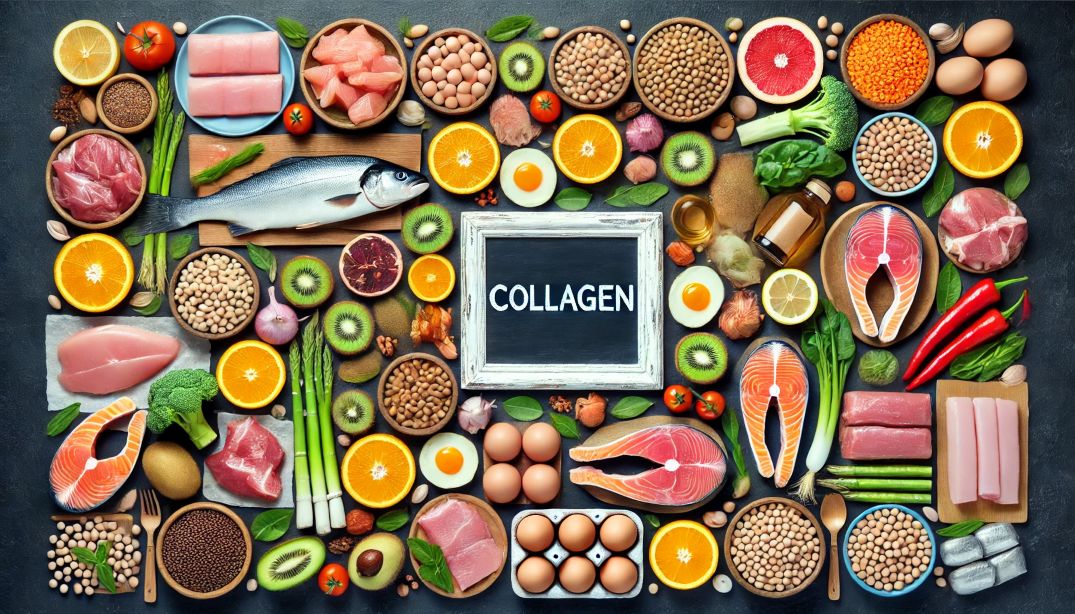
Collagen consumed through food is broken down into amino acids and used by the body, rather than being directly absorbed as collagen. Foods rich in protein—particularly chicken, beef, and fish—are excellent sources of the amino acids required for collagen production. Plant-based sources, such as legumes and soy, are also beneficial.
Micronutrients that support collagen production include:
- Zinc: Found in shellfish, legumes, meat, nuts, seeds, and whole grains.
- Vitamin C: Found in citrus fruits, berries, leafy greens, bell peppers, and tomatoes.
Digestive issues are considered one of the modern era’s prevalent problems. Therefore, it is worth noting that collagen-rich foods can support gut health by strengthening the gut lining, reducing inflammation, and aiding digestion.
Bottom Line
Currently, non-industry-funded research on collagen supplements is limited. Natural collagen production is best supported by a healthy, balanced diet, including sufficient protein, whole grains, fruits, and vegetables, and by reducing lifestyle risk factors.
Key Takeaway Messages
The best evidence for maintaining healthy skin includes:
- Protecting your skin from the sun.
- Avoiding smoking.
- Getting adequate sleep (7–9 hours per night for most adults).
- Managing stress.
- Following a varied diet with a balance of macronutrients and micronutrients, including a mix of protein foods, fruits, and vegetables.
- Staying well-hydrated—approximately 2 litres of water daily for females and 2.5 litres for males.
Finally, it is important to moderate alcohol consumption.
For personalised advice tailored to your unique dietary habits, medical conditions, age, and needs, consider consulting a registered dietitian.
If you would like to learn more about a suitable diet or need help creating one that works for you, do not hesitate to get in touch.
