The Importance of Protein in the menopausal age.
It is indeed important: from combating age-related muscle mass loss to supporting hormonal function, protein plays a key role in building and repairing muscles, bones, skin, hair—every organ in our body. And let’s not forget that protein’s importance during the menopausal years goes even further: it is a building block for every cell, as well as for our hormones. However, protein needs ‘co-workers’ in the form of fibre, carbohydrates, and healthy fats; together, they form an essential foundation for the healthy functioning of our bodies.
Yes, hormones. So remember—if you do not consume enough protein in your diet, it can directly affect the production and function of your hormones.
Protein, alongside fibre, also helps regulate feelings of fullness. If your goal is to maintain a healthy body composition or improve your muscle-to-fat ratio by increasing muscle mass while reducing fat mass for overall health benefits, ensuring an adequate intake of protein becomes even more important.
Women, especially in the years leading up to menopause and during menopause, often find themselves gaining weight they don’t want, so the search for ways to lose unwanted weight begins. How can having the right amount of protein help?
Protein Helps Keep You Full and Satisfied
As mentioned, protein supports the repair and building of muscle mass. But when eaten in amounts that meet your personal needs, it also helps you feel full and satisfied—meaning you’re less likely to feel constantly hungry or frustrated.
If you begin a very restrictive diet that simply cuts meals without nourishing you, you’ll likely return to old habits. Not only that, such dieting can have a negative impact on your goals and your overall health.
A very High-Protein Diet Is Not the Answer, but it’s a part of the Puzzle.
This does not mean that a very high-protein diet is the solution. Far from it. It’s about balancing your diet in a way that works for you. Never cut out entire food groups—this can put you at risk of nutrient deficiencies that may affect your health.
Protein and Your Metabolism
Protein also has an impact on your metabolism. This is due to the work your digestive system needs to do to break down and distribute protein effectively.
Protein Helps Protect Your Muscles From Ageing
How? As we age, we lose muscle mass—whether we like it or not. This begins around age 35, and after 50, the process accelerates due to hormonal changes.
If you don’t eat enough protein, you are not providing your existing muscles with the building blocks they need to preserve and repair themselves.
You may be eating enough calories to maintain your weight, but if your meals are heavy on carbohydrates and low in protein, the scales may look “fine” while your muscle mass quietly declines faster than nature intended.
Of course, diet should go hand-in-hand with exercise, so that your body is stimulated to build and maintain muscle, keeping you strong.
Protein Helps Maintain Stable Glucose Levels
Balanced meals mean fewer blood glucose “jumps”. Why does that matter? Because glucose spikes are often followed by crashes—leading to cravings, overeating, or snacking that might not support your health goals.
If, for some reason, you’re not eating enough at meals, snacks may be needed—but if in doubt, speak to a dietitian.
How Much Protein Should You Have?
It depends.
UK recommendations for women in this age group are 1–1.2 g/kg of body weight, though this may need adjusting depending on your current body composition (e.g., how much muscle mass you already have) and whether you exercise.
If you exercise regularly, aim for around 1.6 g/kg.
Is 30 g of Protein per Meal a Must?
Maybe.
Consuming 30 g of high-quality protein at each meal stimulates muscle protein synthesis more effectively than eating most of your protein at dinner.
It’s a good target—but not necessarily the right amount for everyone.
Downsides of Aiming for 30 g at Breakfast
- It can be expensive if you rely mainly on meat and fish.
- Focusing too much on protein can mean you unintentionally reduce other essential food groups that support healthy digestion.
30 g Protein Breakfast Examples (Dietitian-Approved)
1. Cottage Cheese Toast
- 2 slices wholegrain toast
- Mashed avocado
- ½ cup cottage cheese on each slice
- A drizzle of honey and chilli–onion crunch
2. Spinach and Egg White Wrap
- Wholegrain wrap
- ¾ cup cooked egg whites
- A handful of spinach
- 1 tbsp grated cheddar
- Drizzle of sriracha mayo
3. Overnight Oats
- 40 g rolled oats
- 1 tbsp chia seeds
- 1 tbsp hemp seeds
- 200 ml semi-skimmed milk
- In the morning: 2 tbsp Greek yoghurt, handful of berries, pinch of cinnamon
4. High-Protein Vegan Scramble on Toast
- 150 g firm tofu (15 g protein)
- 50 g chickpea flour (10 g protein)
- 30 g spinach
- 2 tbsp nutritional yeast
- 1 slice wholemeal bread
- ¼ avocado
- Spices: turmeric, paprika, cumin
- Optional: black salt
- Fresh herbs to garnish
This one is a personal favourite.
Are Dairy Products OK?
Yes—unless you have a clinically confirmed medical condition that affects your ability to digest them safely.
Dairy products are an easy way to deliver not only protein but calcium and magnesium, which are vital for muscle mass, bone health and more.
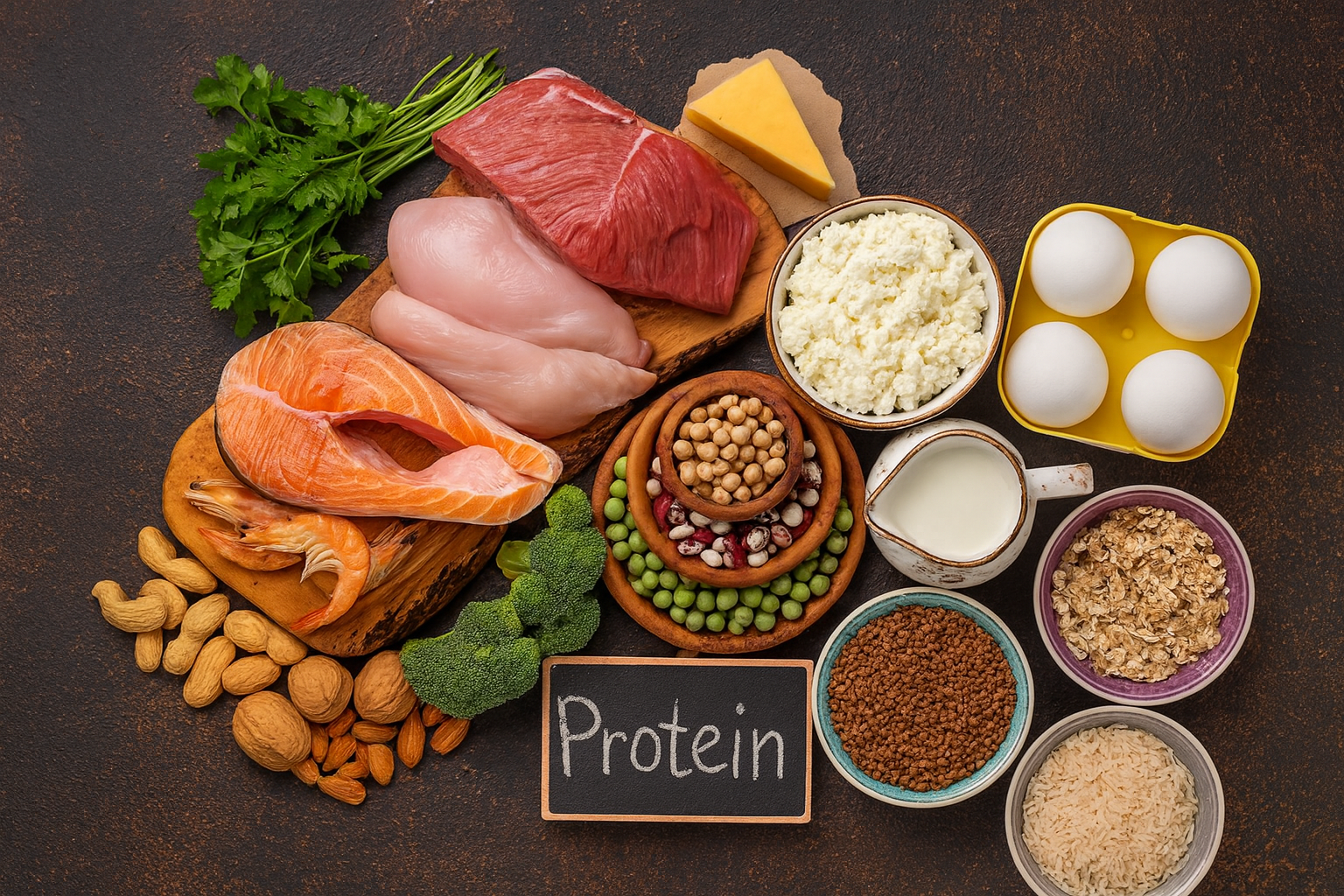
Most Common Protein-Rich Foods Include:
| Protein source | Portion size | Grams of protein in the portion |
| Chicken breast (grilled, without skin) | 100g | 27-29g |
| Turkey breast (grilled, without skin) | 100g | 29-31g |
| Lean beef | 100g | 26-28g |
| Salomon (grilled) | 100g | 25g |
| Smoked salmon | 100g | 18-22g |
| Cod (baked) | 100g | 20-23g |
| Fresh herring | 100g | 17-19g |
| Egg (whole) | 1avg. | 6-7g |
| Milk cow’s | 200ml | 6.4-7g |
| Full-fat Greek yogurt | 125-150g | 12.4-14.9g |
| Skyr (high protein ~1g fat yogurt per serving) | 125-150g | 12.5-15g |
| Lentils, green/brown, boiled and drained | 100g | 8.8g |
| Baked beans | 200g | 10g |
| Hard cheese eg. Emmental | 30g | 9-10g |
