
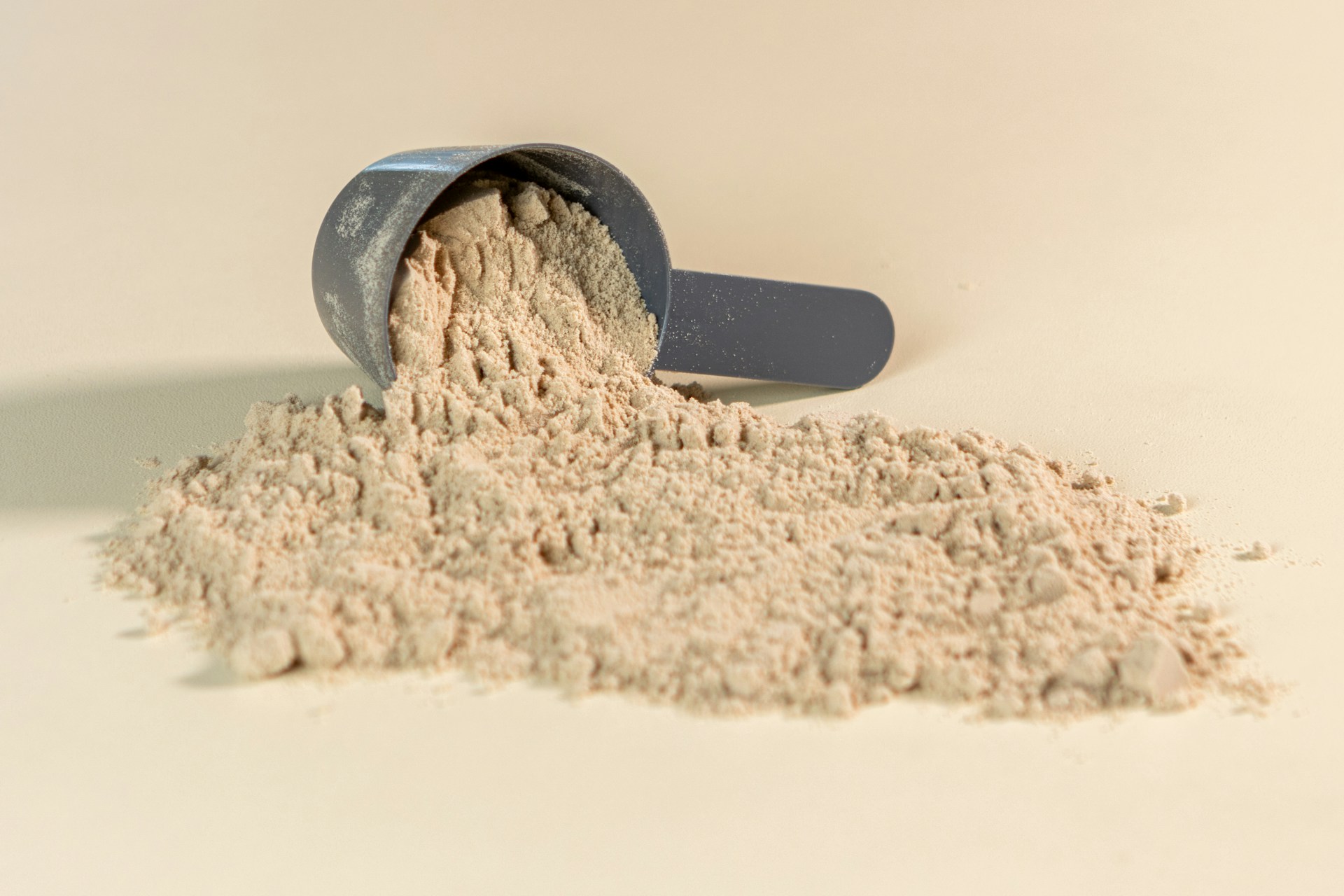
Protein Power: Cutting Through the Noise
Much ado about protein in recent years may have left some people more confused than informed. Much of that noise comes courtesy of influencers with a protein powder agenda and very little, if any, regard for your best interests. As a dietitian, I have watched this issue become more common, so here I am attempting to inform you and assure you that you don’t need to succumb to that media noise.
Dietitians help you meet your protein needs based on your health and goals, starting with whole foods. Influencers, on the other hand, often sell solutions to problems you may not even have. Many, especially in the fitness world, promote protein powders and products aimed at groups like menopausal women or gym-goers, using their own bodies to market these items (Caroll et al., 2025). These claims are not based on science or focused on your well-being.
The wellness industry is not tightly regulated and generates enormous profits from bold promises — and, more concerningly, from encouraging people to doubt their own bodies. The global consumer wellness industry was valued at $1.8 trillion in 2024 (McKinsey and Company). A significant portion of this wealth comes from protein powder sales alone, which are projected to more than double, from approximately $29.78 billion in 2025 to over $63.22 billion by 2033 (Grandview Research, 2025). This is a business story, not a health story.
Marketing steps in with pastel packaging, brands targeting women, and slim influencers adding extra scoops to coffee, porridge, banana bread, or water. The message is always the same: buy this, or you will not reach your goals. Often, these goals only exist because an influencer suggested them.
Influencers do not see you as an individual. They do not ask what you need, why you need it, or if their advice makes sense for your body, digestion, budget, or life. If you suddenly increased your protein intake, how would your digestive system react? You will not hear this question in supplement ads, because without real clinical experience, the consequences are ignored. Cost is also left out. Protein-rich quality supplements are expensive, and advice that ignores your budget is not real advice. It is just a wish list.
The mental side is important too. Clinicians ask whether focusing on a protein target helps you build a better relationship with food or just turns eating into a numbers game, adding stress instead of supporting health. Influencers do not ask this because the answer does not help them sell products.
If you eat too much protein, your body cannot use more than it can absorb, so extra protein does not build more muscle. Instead, it can upset your stomach and just ends up as expensive urine. Research is clear: the body has limits, and going over them does not help.
Protein is important, and deficiencies can happen. But when fear is used to sell products, it is important to pause and question the story you are being told.
Who Actually Needs More Protein — and When Powders Are Clinically Appropriate
Some people truly need more protein, and sometimes food alone is not enough. This is especially true for people who are very ill, such as those with severe burns, hospital patients, people with COPD who struggle to eat, or those with rare conditions like Hutchinson–Gilford Syndrome, where the body breaks down tissue quickly. For them, supplements are a medical tool, not a lifestyle choice. They help prevent muscle loss, support healing, and keep people alive. Older adults also often have trouble meeting the recommended 1.2–1.6 g per kg of lean body mass, as shown by Granic et al. (2018), because of low appetite, changes in taste, difficulty chewing or swallowing, low mood, and money worries. In these cases, supplements can be the most practical way to meet their needs. Protein needs also rise for women in perimenopause and menopause, athletes, and active women of reproductive age. Still, for these groups, the evidence points to food first, with supplement use only if there is a genuinely good reason you can’t hit your daily protein target, otherwise. What influencers call a solution for everyone is actually a clinical tool for special cases, not a replacement for the full nutrition and health benefits of real food.
Influencers Do Not Distinguish Between Protein and Protein
Where your protein comes from is not a small detail. In many cases, it is the most important factor, but influencer content rarely mentions this.
Protein from whole foods comes with a full package of nutrients – vitamins D and E, minerals, lutein, and choline, among others – all of which support brain function, muscle performance, and cholesterol metabolism. Pulses and legumes also provide dietary fibre, which is good for gut health and reduces inflammation (Veronese et al., 2025). Protein powder, on the other hand, is just an isolate. The process removes amino acids from the original food and takes away the other nutrients. The powder is not the same as the food, and it does not deliver the same benefits.
Powell and Pring (2024) reviewed research on social media influencers and found that negative body image is a common outcome, especially for women and, as I am seeing more in my practice, for teenage boys. Fitness influencers often share their own views about food and body image, and people who follow them are more likely to feel anxious about food, ignore their hunger and fullness cues, and focus on numbers instead of what their bodies actually need.
Dietitians and clinicians want the opposite. Their goal is to help you build a stronger relationship with food, not to make you afraid of it or treat eating as something to avoid.
The Problem with Protein Powders — Beyond the Marketing
Influencers often use dramatic before-and-after photos to make protein powders look like an easy fix. Personal stories can be powerful, but they are not the same as real evidence, and what works for one person does not apply to everyone.
Quick fixes that focus on single nutrients do not improve public health. Research shows that long-term health comes from overall eating patterns, not from taking supplements alone. Protein powders can help in certain short-term or medical situations. In those cases, the product itself is not the issue. The real problem is the idea that powders are better for everyone than real food, which is not supported by evidence. Another problem is the quantities influencers suggest as your target, which leads to the need for supplements. Most of the time, these are not evidence-based recommendations.
Protein supplements are processed protein formulations from sources like whey, casein, pea, rice, soy, or egg albumin, but not only. Those processes deliver not only a high amount of protein per scoop but also various amounts of sugars, additives, and preservatives, which manufacturers add to enhance flavour and increase shelf life(Patel et al, 2023). Protein powder originated as a medical tool for people who cannot get enough nutrition from food. The supplement industry has turned it into a daily product for healthy adults, but that is a business choice, not a nutrition-based one.
Many commercial protein powders also contain artificial sweeteners like sucralose, erythritol, acesulfame potassium, or processed stevia, as well as gums, emulsifiers, stabilisers, artificial flavours, bulking agents, and low-quality whey that is hard to digest. Studies show that long-term exposure to some of these additives can disrupt the gut microbiome, increase gut permeability, and cause ongoing low-level gut inflammation (Kidangathazhe A, et al, 2025). Still, it is a balancing act, especially from a clinical perspective. For someone unwell, meeting overall health needs is more important, as missing nutrients can have serious consequences. Dietitians can choose supplements tailored to different clinical situations, so if one causes GI problems, we select another that is more suitable to help the patient get stronger and improve their nutrition. That is a whole other conversation.
When companies add vitamins and minerals to protein powders to make them seem more nutritious, two problems come up. First, the label might not match what is actually inside, since protein powders are not subject to the same pre-market regulation as pharmaceutical products. Published research shows big differences between what is declared and what is actually in the product (Jallil, T, et al., 2024). The European Food Safety Authority has set guidelines for mineral levels in these products, as some elements, like vanadium and copper, have daily upper limits that can be exceeded and cause health risks. Second, vitamins and minerals added to powders are not the same as those found naturally in whole foods. Because many minerals and vitamins compete for absorption, and their amounts in the product are often unknown, these added nutrients offer little benefit, if any. Compliance with labelling standards in the supplement sector remains inconsistent, and fraud cases continue to occur.
Protein Quality Matters — and Real Food Wins
Whole-food proteins provide a mix of nutrients that protein isolates cannot match, including easily absorbed amino acids, vitamins, minerals, healthy fats, and fibre. Nutrition science supports this—it is a fact, not just an opinion. For example, omega-3 fatty acids are found in whole foods and are easy to get with good meal planning. They help reduce inflammation throughout the body, including the brain. Protein powders do not offer this benefit.
The longest-living people in places like Okinawa, Sardinia, and Greece do not use protein powders. They eat whole foods like legumes, vegetables, local produce, nuts, seeds, and, when it fits their culture, minimally processed animal protein. Research on longevity shows that overall eating habits, not supplements, support healthy aging. These populations stay strong and active as they age because they eat real food, not because they focus on single nutrients.
Health is about more than just getting nutrients. The way you relate to food over your life, including trust, variety, and not being afraid or obsessed with numbers, matters a lot, even though marketing ignores this. Relying on outside targets and habits does not lead to lasting health. Research in nutrition shows that long-term eating habits are better for health than short-term fixes focused on single nutrients.
The Real Picture: Quality Over Quantity
Protein does much more than build muscle. Your body uses it to make hormones, keep your immune system working, repair tissue at a cellular level, and produce the enzymes needed for digestion. The source of your protein matters too, since it provides much more than protein alone. Try to nourish your body with real food first, and use powders only when you truly need them. Meeting your protein needs is important, but how you meet them matters just as much as the amount.
Consider your life stage, budget, and what is realistically available to you. Increase your protein intake gradually if needed, stay active, and see food as something that strengthens you, not something to fear or restrict.
References
- Powell J, Pring T. The impact of social media influencers on health outcomes: systematic review. Soc Sci Med. 2024;340:116472.; PubMed 38070305
- Granic A et al. (2018). Dietary patterns and physical performance in the very old: the Newcastle 85+ study.
- Powell J, Pring S (2024). Social media influencer impact review.
- Global Wellness Institute. Global wellness economy data, 2024.
- Veronese N, Gianfredi V, Solmi M et al. The impact of dietary fibre consumption on human health: an umbrella review of evidence from 17,155,277 individuals. Clinical Nutrition. 2025; 51: 325–333.
- Martínez-Sanz JM, Sospedra I, Ortiz CM, Baladía E, Gil-Izquierdo A, Ortiz-Moncada R. Intended or unintended doping? A review of the presence of doping substances in dietary supplements used in sports. Nutrients. 2017; 9: 1093.
- Carroll M. A systematic review of the prevalence of disordered eating in fitness professionals [Internet]. Eat Behav. 2025 [cited 2026 Mar 26];58:101999. Available from: https://www.sciencedirect.com/science/article/pii/S1471015325001102
- Jalili T, et al. Appraisal of potentially toxic metals contamination in protein supplements. J Food Compos Anal. 2024;134:105567.
- Kidangathazhe A, Amponsah T, Maji A, Adams S, Chettoor M, Wang X, et al. Synthetic vs. non-synthetic sweeteners: their differential effects on gut microbiome diversity and function. Front Microbiol. 2025;16:1531131. doi: 10.3389/fmicb.2025.1531131.
- Patel V, Aggarwal K, Dhawan A, Singh B, Shah P, Sawhney A, Jain R. Protein supplementation: the double-edged sword. Proc (Bayl Univ Med Cent). 2023 Dec 20;37(1):118-126. doi: 10.1080/08998280.2023.2280417. PMID: 38174000; PMCID: PMC10761008.
